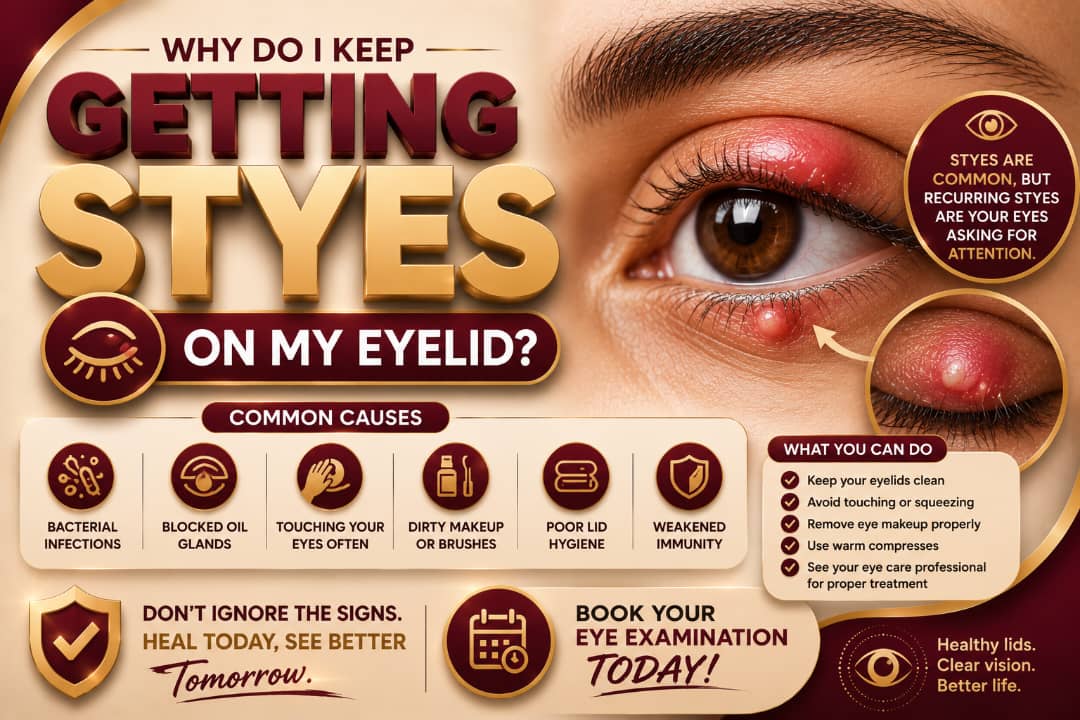
Why Do I Keep Getting a Painful Lump on My Eyelid?
A lump or stye is a painful, red lump that forms on the eyelid when one of the oil glands becomes blocked and infected. While a single stye is common and often harmless, getting them repeatedly may be a sign of poor eyelid hygiene, chronic eyelid inflammation (blepharitis), diabetes, or another underlying problem. If you keep getting styes, it's important to have your eyes examined.
Why Do I Keep Getting Styes on My Eyelid?
You wake up with a painful lump on your eyelid.
It eventually disappears.
Then a few weeks later:
another one appears.
Sometimes on the same eyelid.
Sometimes on the other eye.
And eventually you start asking:
“Why do I keep getting styes?”
A single stye is very common.
But if you are getting them repeatedly, it is worth asking whether something is making your eyelid glands more likely to become blocked and inflamed.
Common possibilities include:
- Blepharitis
- Blocked eyelid oil glands
- Meibomian gland dysfunction
- Frequent eye rubbing
- Eye makeup or cosmetic products
- Certain skin conditions
- Poor contact-lens habits
- Previous styes or chalazia
- Diabetes or other health conditions in some people
The goal is not simply to treat today's lump.
It is to understand why it keeps returning.
Quick Answer: Why Do I Keep Getting Styes?
Recurrent styes often happen because the small oil-producing glands in the eyelids repeatedly become blocked or inflamed.
This is particularly common in people with:
- Blepharitis
- Meibomian gland dysfunction
- Oily or inflamed eyelid margins
- Frequent eye rubbing
- Certain skin conditions
- Repeated eyelid irritation
If you keep developing styes, especially several times a year or repeatedly in the same place, an eyelid examination may help identify the underlying problem.
Book Appointment
What Exactly Is a Stye?
A stye is also called a hordeolum.
It is an acute inflamed lump involving one of the glands in or around the eyelid.
It often looks a little like a pimple.
A stye may be:
External, meaning it develops closer to the eyelash line.
or
Internal, meaning it develops deeper inside the eyelid.
Typical symptoms include:
- A painful eyelid lump
- Tenderness
- Swelling
- Redness
- Watering
- A small yellow or white point
- A feeling of irritation around the eye
Most uncomplicated styes improve without causing long-term damage.
Why Does a Stye Hurt?
A stye is usually inflamed and may involve bacterial infection within an eyelid gland.
That inflammation creates:
- Swelling
- Pressure
- Tenderness
This is why a new stye is often painful to touch.
If the lump becomes relatively firm but stops hurting, it may no longer be an active stye.
It could instead be a chalazion.
Is a Stye the Same as a Chalazion?
No.
They can look similar, which is why people often confuse them.
A Stye
A stye is usually:
- More sudden
- Painful
- Red
- Tender
- Associated with acute inflammation
A Chalazion
A chalazion is usually:
- Less painful or painless
- Firmer
- Longer-lasting
- Caused by a blocked oil gland rather than an active acute infection
A stye can sometimes settle and leave a chalazion behind.
So you may say:
“The pain disappeared, but the lump is still there.”
That does not necessarily mean the infection is still active.
1. Could Blepharitis Be Causing My Repeated Styes?
Yes.
This is one of the first things I would think about in someone with recurrent eyelid lumps.
Blepharitis simply means inflammation around the eyelid margins.
Possible symptoms include:
- Crust around the eyelashes
- Burning
- Itching
- Red eyelid margins
- Grittiness
- Dry-eye symptoms
- Recurrent styes or chalazia
Some people have blepharitis for years without realising it.
They simply think:
“My eyes are always irritated.”
or:
“I just get styes easily.”
Treating the underlying eyelid inflammation may help reduce repeated episodes.
2. What Is Meibomian Gland Dysfunction?
Your eyelids contain tiny glands called meibomian glands.
These glands produce oils that help keep your tear film stable.
When the oil becomes too thick or the gland openings become blocked, this is called meibomian gland dysfunction, often shortened to MGD.
In simple English:
The tiny oil pipes in the eyelid are not flowing properly.
Blocked glands can contribute to:
- Dry eye
- Eyelid irritation
- Chalazia
- Recurrent styes
This is one reason warm compresses can be useful.
They help soften the oil inside the eyelid glands.
3. Does Poor Eyelid Hygiene Cause Styes?
Sometimes eyelid debris and inflammation may contribute, but I would not tell every patient:
“You get styes because your eyelids are dirty.”
That is too simplistic.
People with very good personal hygiene can still develop:
- Blepharitis
- Meibomian gland dysfunction
- Chalazia
- Styes
Eyelid cleaning may form part of treatment when appropriate, but recurrent styes deserve more than simply being told to wash better.
4. Can Rubbing My Eyes Cause Styes?
Frequent rubbing can contribute to eyelid irritation and may transfer bacteria from your hands to the eyelid area.
Think about what your hands touch every day:
- Phones
- Money
- Door handles
- Computer keyboards
- Car surfaces
Then we rub our eyes without thinking.
If your eyes are constantly itchy and making you rub them, it may be worth treating the reason for the itching too.
Read Why Are My Eyes Always Itchy?.
5. Can Eye Allergies Contribute?
Indirectly, yes.
Allergies commonly make people rub their eyes repeatedly.
That rubbing can:
- Irritate the eyelids
- Worsen eyelid inflammation
- Increase exposure to bacteria from the hands
So if recurrent styes happen alongside:
- Itching
- Watering
- Puffy eyelids
- Frequent rubbing
the allergy may also need attention.
6. Can Makeup Cause Styes?
Eye makeup can sometimes contribute to eyelid irritation or gland blockage, particularly if products:
- Are left on overnight
- Are old or contaminated
- Are shared between people
- Are applied directly around gland openings
- Irritate your eyelids
During an active stye, it is usually sensible to avoid eye makeup until the eyelid settles.
And do not share eye makeup with someone else.
7. Should I Throw Away My Makeup After a Stye?
Not necessarily every product in every case.
But if eye makeup was being used around the time an infection developed and there is concern it may have become contaminated, replacing eye products may be sensible.
Pay particular attention to products that directly touch:
- Eyelashes
- Eyelid margins
- The eye surface
Good cosmetic hygiene is more useful than simply buying new products every few weeks.
8. Can Contact Lenses Cause Styes?
Contact lenses do not directly cause every stye.
But poor hand and lens hygiene can increase eye and eyelid problems.
If you wear contact lenses:
- Wash your hands before touching them
- Follow the correct replacement schedule
- Clean reusable lenses properly
- Do not use contaminated lens cases
- Do not continue wearing lenses when the eye is significantly irritated
If your eyelid is swollen and painful, glasses may be more comfortable until the problem settles.
9. Can Diabetes Cause Recurrent Styes?
Diabetes may increase susceptibility to certain infections, particularly when blood sugar is poorly controlled.
But this distinction is important:
Getting styes does not mean you have diabetes.
Recurrent styes alone should not be used to diagnose diabetes.
However, if somebody has recurrent infections and also has other medical risk factors or symptoms, appropriate general medical assessment may be sensible.
If you already live with diabetes, you should also have your retinal health monitored at the interval recommended for you.
Read Can Diabetes Affect My Eyes Even If I Can See Clearly?.
10. Can Skin Conditions Cause Recurrent Styes?
Yes.
Some chronic skin conditions are associated with eyelid inflammation and meibomian gland problems.
For example, people with conditions such as rosacea may also develop eyelid and gland problems.
If recurrent styes occur together with persistent:
- Facial redness
- Eyelid inflammation
- Dry eyes
- Burning
- Repeated chalazia
your optometrist may look more closely at the overall pattern rather than treating each lump separately.
Can Stress Cause Styes?
Stress should not be described as a direct cause of styes.
During stressful periods, people may:
- Sleep poorly
- Rub their eyes more
- Neglect normal routines
- Experience other health changes
But that does not mean:
Stress directly blocked an eyelid gland and created the stye.
If styes keep returning, look for more established causes such as eyelid inflammation and gland blockage.
Should I Squeeze or Pop a Stye?
No.
Even if it looks exactly like a pimple.
Do not:
- Squeeze it
- Pierce it
- Cut it
- Try to drain it with a needle
Doing that can:
- Increase inflammation
- Spread infection
- Cause injury
- Delay recovery
Allow it to drain naturally or seek professional treatment if it does not improve.
What Is the Best Home Treatment for a Stye?
For a simple uncomplicated stye, warm compresses are usually one of the first measures.
How to Do a Warm Compress
Use a clean cloth with comfortably warm water.
Place it gently over the closed eyelid.
Keep it there for around 10–15 minutes.
You can repeat this several times during the day.
The compress should feel warm.
Not painfully hot.
The purpose is to help soften material within the blocked gland and encourage drainage.
Should I Massage the Eyelid?
Gentle eyelid massage may sometimes be recommended after warming the eyelid.
But do not:
- Press aggressively
- Try to burst the lump
- Force material out
If you are unsure how to massage the eyelid safely, ask your eye-care professional to show you.
Book Appointment
Should I Use Antibiotic Eye Drops?
Not every stye requires antibiotic drops.
A blocked or inflamed eyelid gland is not automatically treated successfully by putting random antibiotics into the eye.
Treatment depends on:
- Where the stye is
- How severe it is
- Whether surrounding tissue is infected
- Whether it is really a stye or something else
Do not repeatedly self-medicate with antibiotic drops simply because a lump has appeared.
What About Antibiotic Ointment?
Sometimes an eye-care professional may prescribe medication when there is a clinical reason.
But again:
Not every eyelid lump requires antibiotics.
Warm compresses and appropriate eyelid care are often important first measures for uncomplicated cases.
The treatment should match what is actually found during examination.
Should I Stop Wearing Contact Lenses?
During an active painful stye, it may be sensible to stop wearing contact lenses temporarily, particularly if the eye itself is irritated.
Use your glasses until the eyelid problem settles.
If your eye becomes:
- Red
- Painful
- Sensitive to light
- Blurry
while wearing contact lenses, that deserves more urgent assessment because the problem may involve the cornea rather than simply the eyelid.
Can I Wear Makeup With a Stye?
It is better to avoid eye makeup while the eyelid is actively inflamed.
Makeup can:
- Irritate the area
- Interfere with drainage
- Contaminate applicators
- Make hygiene more difficult
Let the eyelid settle first.
How Long Does a Stye Take to Go Away?
Many uncomplicated styes begin improving over several days.
Some take longer.
If the pain disappears but a firm lump remains, it may have developed into a chalazion.
A persistent lump may need further assessment rather than endless home treatment.
Why Has My Stye Turned Into a Hard Lump?
That hard lump may be a chalazion.
The acute inflammation may have settled, but material remains trapped inside the gland.
A chalazion is usually much less painful than a fresh stye.
Warm compresses may still be advised.
Persistent or large chalazia may sometimes require treatment by an eye specialist.
When Should I See an Optometrist for a Stye?
Arrange an examination if:
- You keep getting styes
- The lump becomes very large
- It repeatedly occurs in the same place
- It is not improving
- A firm lump remains for weeks
- The eyelid becomes increasingly swollen
- Your eye itself becomes very red
- Your vision changes
- You are unsure whether it is actually a stye
Recurrent eyelid lumps deserve examination rather than repeatedly treating them at home.
What If the Whole Eyelid Becomes Swollen?
A small localised stye is very different from swelling spreading across the eyelid or face.
Seek prompt medical assessment if swelling:
- Spreads significantly
- Becomes very painful
- Is associated with fever
- Makes opening the eye difficult
- Is associated with reduced vision
- Is associated with pain when moving the eye
These symptoms can suggest infection spreading beyond a simple stye.
What If I Keep Getting a Lump in Exactly the Same Place?
This is particularly worth mentioning during an examination.
Most recurrent lumps are still caused by common eyelid-gland problems.
But a persistent or repeatedly recurring lump in exactly the same place, especially in an older adult, may occasionally require closer investigation to make sure something else is not masquerading as a chalazion.
Do not keep squeezing or treating the same persistent lump indefinitely.
Can a Stye Affect My Vision?
A small stye normally should not cause major vision loss.
A very swollen eyelid may temporarily make vision feel obstructed.
A large chalazion can occasionally press on the cornea and affect vision.
But significant or sudden reduction in vision is not something to simply blame on an ordinary stye.
Have it assessed.
Is a Stye Contagious?
The stye itself is not usually thought of as something that simply jumps from one person to another.
But bacteria can be transferred through:
- Hands
- Towels
- Makeup
- Other contaminated items
Good hand hygiene is therefore sensible.
Do not share eye makeup or towels while you have an active eyelid infection.
Can I Prevent Styes From Coming Back?
You cannot guarantee that you will never develop another stye.
But if recurrent episodes are linked to eyelid inflammation or blocked glands, managing the underlying problem may reduce recurrence.
Depending on what your eye-care professional finds, prevention may involve:
- Regular eyelid care
- Warm compresses
- Managing blepharitis
- Managing meibomian gland dysfunction
- Avoiding aggressive eye rubbing
- Good makeup hygiene
- Appropriate contact-lens hygiene
- Managing associated skin or health conditions
The prevention plan should match the cause.
Why Do I Keep Getting Styes in One Eye?
Repeated styes in one eye may simply mean that eyelid has more gland blockage or inflammation.
But if lumps repeatedly appear in exactly the same area, mention this during your appointment.
It may need closer examination.
Why Do I Keep Getting Styes Every Few Months?
Repeated episodes suggest that something may be making your eyelid glands prone to blockage.
Common possibilities include:
- Blepharitis
- Meibomian gland dysfunction
- Chronic eyelid irritation
- Eye rubbing
- Certain skin conditions
Instead of treating each episode as an entirely separate event, it may be more useful to examine the eyelid between episodes.
What Happens During an Examination for Recurrent Styes?
At Blossom Vision Eye Clinic in Games Village, Abuja, we do not only look at today's lump.
We want to understand why it keeps happening.
Depending on your symptoms, the examination may assess:
- Eyelid margins
- Eyelashes
- Meibomian gland openings
- Signs of blepharitis
- Tear film
- Eye surface
- Location of the lump
- Previous styes or chalazia
- Contact-lens habits
- Other eye-health findings where appropriate
We may also ask:
- How often do the lumps occur?
- Is it always the same eyelid?
- Is it always the same exact spot?
- Do your eyelids crust?
- Do your eyes itch?
- Do you rub your eyes frequently?
- Do you use eye makeup?
- Do you wear contact lenses?
- Do you have diabetes or another relevant medical condition?
That information helps us decide whether this is an isolated stye or part of a longer-term eyelid problem.
How Much Does It Cost to Get My Eyes Checked?
If you need an eye assessment, you can see our current guide to eye test costs in Abuja.
If you are experiencing recurring irritation as well as eyelid lumps, you may also find our guide on why your eyes may be red all the time useful once the exact URL for that new article is confirmed.
Frequently Asked Questions
Why do I keep getting styes?
Recurrent styes are commonly associated with blepharitis, blocked meibomian glands, chronic eyelid inflammation and repeated eyelid irritation.
Is a stye caused by poor hygiene?
Not always. Eyelid hygiene can play a role, but people with good hygiene can still develop styes because of gland blockage, blepharitis or other eyelid conditions.
Is a stye the same as a chalazion?
No. A stye is typically an acute painful inflamed lump, while a chalazion is usually a more chronic, firm and relatively painless blocked gland.
Should I squeeze a stye?
No. Squeezing or piercing it can worsen inflammation and potentially spread infection.
What is the best home treatment?
Warm compresses applied to the closed eyelid for around 10–15 minutes several times daily are commonly used for uncomplicated styes.
Do I need antibiotics?
Not every stye requires antibiotics. The appropriate treatment depends on the examination findings.
Can diabetes cause styes?
Diabetes may increase susceptibility to infection in some people, but recurrent styes alone do not mean you have diabetes.
Can stress cause styes?
Stress is not considered a direct cause of styes. Other factors such as eyelid inflammation and blocked glands are more important.
Are styes contagious?
A stye itself is not usually considered highly contagious, but bacteria can be transferred through hands, towels and makeup.
Why does my stye keep coming back in the same place?
Repeated lumps in exactly the same location deserve examination. Common gland problems are possible, but persistent recurrence may require closer investigation.
When should I worry about a stye?
Seek assessment if it repeatedly returns, becomes very swollen, does not improve, affects your vision, is associated with fever or spreading swelling, or keeps appearing in the same exact location.
Where can I get recurrent styes checked in Abuja?
Blossom Vision Eye Clinic provides eyelid and comprehensive eye assessment in the Games Village/Kaura District area of Abuja.
Stop Treating Every New Lump as a Completely New Problem
If you develop one stye once in a long while, it may simply be an isolated event.
But if you keep saying:
“Not again.”
every few weeks or months, the better question becomes:
“Why do my eyelid glands keep becoming blocked?”
The answer may be blepharitis.
It may be meibomian gland dysfunction.
It may be repeated irritation.
It may be another eyelid condition.
At Blossom Vision Eye Clinic in Games Village, Abuja, we can examine the eyelid margins and eye surface and help identify what may be causing the recurrence.
If you keep getting styes, do not just wait for the next lump. Have the underlying eyelid problem assessed.