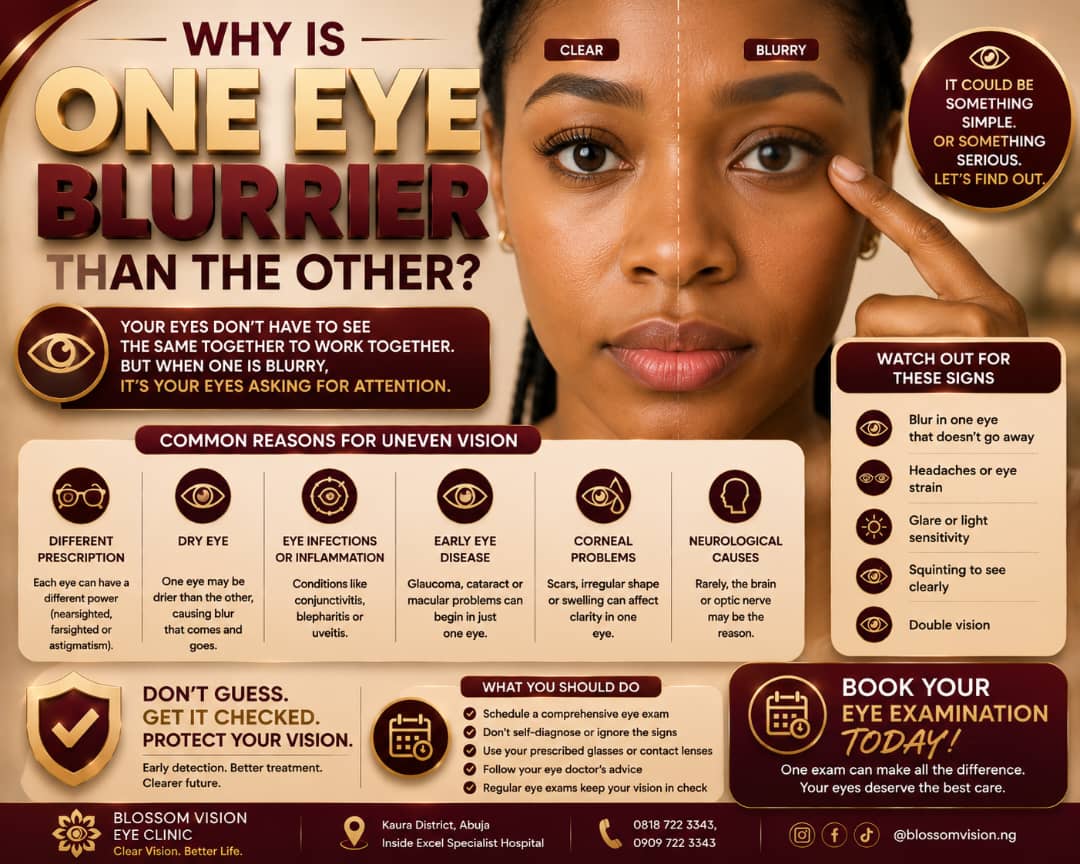
Why Is One Eye Blurrier Than the Other? Causes & When to Worry
Why Is One Eye Blurrier Than the Other?
If one eye is blurrier than the other, the cause may be as simple as a difference in your glasses prescription or dry eye. Other possible causes include cataract, amblyopia, retinal problems or conditions affecting the optic nerve.
A small difference between the eyes can be common, but a noticeable or new difference should be assessed. If the change happened suddenly, especially with flashes, new floaters, pain or loss of part of your vision, seek urgent medical attention.
Quick Answer
Have you ever covered one eye and suddenly realised:
“Wait... I can see much better with this eye than the other one.”
Many people do not realise one eye is weaker because the clearer eye quietly does more of the work.
You might first notice it while driving, reading, watching television or simply covering one eye.
Sometimes the difference has been there for years.
Sometimes it is new.
The important question is not simply which eye is blurrier.
It is why the two eyes are seeing differently.
Is It Normal for One Eye to Be Blurrier Than the Other?
A small difference in vision between the two eyes can occur.
For example, one eye may have a slightly different glasses prescription from the other.
However, a significant difference should be investigated.
Your two eyes normally work together to provide clear, comfortable vision and depth perception.
When one eye is much blurrier, you may experience:
- Headaches
- Eye strain
- Difficulty judging distance
- Problems driving
- Difficulty reading
- Visual fatigue
If you are unsure what a full examination involves, our guide to eye test prices and what is included in an eye examination in Abuja explains what to expect.
Book Appointment
Why Is My Right Eye Blurrier Than My Left?
There is usually nothing about the right eye itself that makes it more likely to become blurry.
If your right eye is blurrier, possible causes include:
- A different glasses prescription
- Dry eye affecting that eye more
- Cataract developing more in one eye
- A longstanding weaker eye from childhood
- Retinal or optic nerve problems
- Another condition affecting that eye
The same causes can affect the left eye.
What matters most is whether the difference is longstanding or new, mild or significant, and stable or getting worse.
Why Is My Left Eye Blurrier Than My Right?
If your left eye is blurrier than your right, the possible causes are similar.
One eye may simply have a stronger prescription than the other.
But if the difference appeared recently or is getting worse, it should not automatically be blamed on glasses.
An eye examination can compare each eye separately and identify where the difference is coming from.
1. Your Glasses Prescription May Be Different in Each Eye
This is one of the most common explanations.
Your two eyes do not always have exactly the same prescription.
One eye may be more short-sighted, long-sighted or have more astigmatism than the other.
You may notice:
- One eye looks sharper than the other
- Reading feels uncomfortable
- You close one eye to see more clearly
- You develop headaches after close work
- Your current glasses no longer seem balanced
If the cause is simply a prescription difference, updated glasses or contact lenses may improve the vision.
2. Dry Eye Can Affect One Eye More Than the Other
Dry eye does not always affect both eyes equally.
The tear film covering the front of your eye is important for clear vision.
If the tear layer becomes unstable in one eye, vision may become temporarily blurry.
You may notice:
- Vision improves after blinking
- Burning
- Grittiness
- Watering
- Redness
- Vision that changes during the day
If the blur repeatedly clears after blinking, read our guide on why vision may go blurry and then clear again.
3. Cataract May Develop More in One Eye
A cataract is a gradual clouding of the natural lens inside the eye.
Cataracts do not always develop at the same speed in both eyes.
One eye may therefore become blurrier before the other.
Other symptoms can include:
- Increasing glare
- Difficulty driving at night
- Halos around lights
- Colours appearing less bright
- Gradually worsening vision
An eye examination can help distinguish cataract from a simple prescription change.
4. Amblyopia or a Longstanding Weaker Eye
Some adults have had one weaker eye since childhood without fully realising it.
This condition is called amblyopia, sometimes known as lazy eye.
It develops when normal vision does not develop properly in one eye during childhood.
Because the stronger eye compensates, a person may only discover the difference during an eye examination or when they accidentally cover the stronger eye.
Amblyopia begins in childhood, so a newly blurry eye in an adult should not automatically be assumed to be a lazy eye.
5. Glaucoma
Glaucoma damages the optic nerve and often develops without obvious symptoms in its early stages.
The two eyes may not always be affected equally.
However, glaucoma usually cannot be diagnosed from blur alone.
Testing may include eye pressure measurement, examination of the optic nerve, visual field testing and other tests depending on your risk factors and examination findings.
You can read more about glaucoma screening, tests and current glaucoma test costs in Abuja.
Early detection matters because vision already lost from glaucoma cannot usually be restored.
6. Problems With the Retina
The retina is the light-sensitive tissue at the back of the eye.
A condition affecting the retina in one eye can reduce vision in that eye.
Examples include:
- Diabetic retinal disease
- Macular disease
- Retinal tears
- Retinal detachment
- Other retinal conditions
Some retinal problems develop gradually.
Others can happen suddenly and require urgent treatment.
7. Problems With the Optic Nerve
The optic nerve carries visual information from the eye to the brain.
If the optic nerve is damaged or inflamed, the affected eye may become blurry even if the front of the eye looks normal.
This is another reason why simply buying stronger glasses is not always the answer.
Book Appointment
Can One Eye Have a Stronger Prescription Than the Other?
Yes.
It is quite possible for one eye to need a different prescription from the other.
The difference may be small or significant.
A proper refraction tests each eye separately so your optometrist can determine the prescription needed for each eye.
Can Dry Eye Make Only One Eye Blurry?
Yes.
One eye may have a less stable tear film or more irritation than the other.
If dryness is responsible, the vision may fluctuate rather than remain constantly blurry.
A useful clue is vision that temporarily improves after blinking.
If dry eye symptoms also make your eyes feel tired or heavy, read our guide on why your eyes may feel heavy all the time.
Should I Just Buy New Glasses?
Not automatically.
Blurred vision can certainly be caused by a prescription problem.
But one blurry eye may also be related to:
- Dry eye
- Cataract
- Glaucoma
- Retinal disease
- Optic nerve problems
- Eye inflammation
- Other eye conditions
The safest approach is to identify the cause first.
If the examination shows that the problem is simply your prescription, then the correct glasses can be prescribed.
When Is Blurry Vision in One Eye an Emergency?
Seek urgent medical attention if you experience:
- Sudden loss of vision in one eye
- A curtain or shadow over part of your vision
- New flashes of light
- A sudden shower of new floaters
- Severe eye pain
- New double vision
- Blurred vision following a significant eye injury
- Sudden neurological symptoms such as facial weakness or difficulty speaking
New flashes, many new floaters or a curtain-like shadow may indicate a retinal emergency.
Read our guide on eye floaters and warning signs that should not be ignored if you are experiencing these symptoms.
What Happens During an Eye Examination?
At Blossom Vision Eye Clinic, we do not simply ask you to read letters on a chart.
We compare the two eyes carefully and investigate why one is seeing differently.
Depending on your symptoms, your examination may include:
- Vision testing in each eye separately
- Glasses prescription assessment
- Eye pressure measurement
- Examination of the front of the eye
- Eye muscle and focusing assessment
- Examination of the retina
- Optic nerve assessment
- Overall eye health evaluation
Further tests may be recommended if your examination suggests they are needed.
Can Children Have One Blurry Eye?
Yes.
This is particularly important because children may not realise one eye is weaker.
The stronger eye can compensate, so the child may not complain about blurry vision.
Possible signs include:
- Squinting
- Closing one eye
- Tilting the head
- Sitting very close to screens
- Difficulty with some schoolwork
- Problems judging distances
Because vision develops during childhood, identifying significant differences between the eyes early is important.
When Should One Blurry Eye Be Checked by an Optometrist?
Arrange an eye examination if:
- One eye is noticeably blurrier than the other
- The difference is new
- The difference is getting worse
- Your glasses no longer provide balanced vision
- You regularly close one eye to see clearly
- You have headaches or eye strain
- You have diabetes
- You have a family history of glaucoma
- The problem interferes with reading, driving or work
You do not need to wait until the vision becomes severely blurred before having it assessed.
How We Help at Blossom Vision Eye Clinic, Abuja
At Blossom Vision Eye Clinic in Games Village, Abuja, our optometrists take time to examine each eye separately and understand why your vision is different between the two eyes.
The answer may be as straightforward as a new glasses prescription.
Or the examination may show that another part of the eye needs attention.
Our aim is to explain the findings clearly and recommend the appropriate next step rather than guessing from the symptom alone.
Key Takeaways
- A small difference between your eyes can be common.
- A significant or new difference deserves an eye examination.
- Different glasses prescriptions are a common cause.
- Dry eye and cataract can affect one eye more than the other.
- Glaucoma, retinal disease and optic nerve problems can also affect vision.
- Amblyopia is a childhood condition and does not explain a newly blurry eye in an adult.
- Sudden vision changes, flashes, new floaters or a curtain-like shadow need urgent assessment.
Frequently Asked Questions
Why is one eye blurrier than the other?
Possible causes include a difference in glasses prescription, dry eye, cataract, a longstanding weaker eye or problems affecting the retina or optic nerve. An eye examination can determine the cause.
Is it normal for one eye to be stronger than the other?
A small difference is common. A large difference, a new difference or one that is getting worse should be assessed.
Why is my right eye blurrier than my left?
One eye may have a different prescription, more dryness, cataract or another eye condition. The side alone does not tell us the cause.
Why is my left eye blurrier than my right?
The same conditions that make the right eye blurry can affect the left. An examination compares both eyes and identifies where the difference comes from.
Can needing glasses affect only one eye?
Yes. The prescription can differ between the two eyes.
Can dry eye affect just one eye?
Yes. Dryness and tear-film instability can be more noticeable in one eye and may cause vision to fluctuate.
Should I worry if one eye suddenly becomes blurry?
Sudden unexplained blurred vision in one eye should be assessed promptly, particularly if it comes with flashes, new floaters, a curtain-like shadow, pain or significant vision loss.
Can children have blurry vision in only one eye?
Yes. Children can have a significant prescription difference or amblyopia in one eye without realising it, which is why eye examinations during childhood are important.
Don't Let the Stronger Eye Hide a Problem
Your stronger eye can sometimes compensate so well that you do not realise the other eye is seeing poorly.
If you have noticed that one eye is blurrier than the other, finding the cause is more useful than simply guessing that you need stronger glasses.
At Blossom Vision Eye Clinic in Games Village, Abuja, we can examine both eyes carefully, explain what we find and recommend the appropriate next step.
Book your comprehensive eye examination today.