Child Vision Problems in Abuja: 7 Signs Parents Often Miss
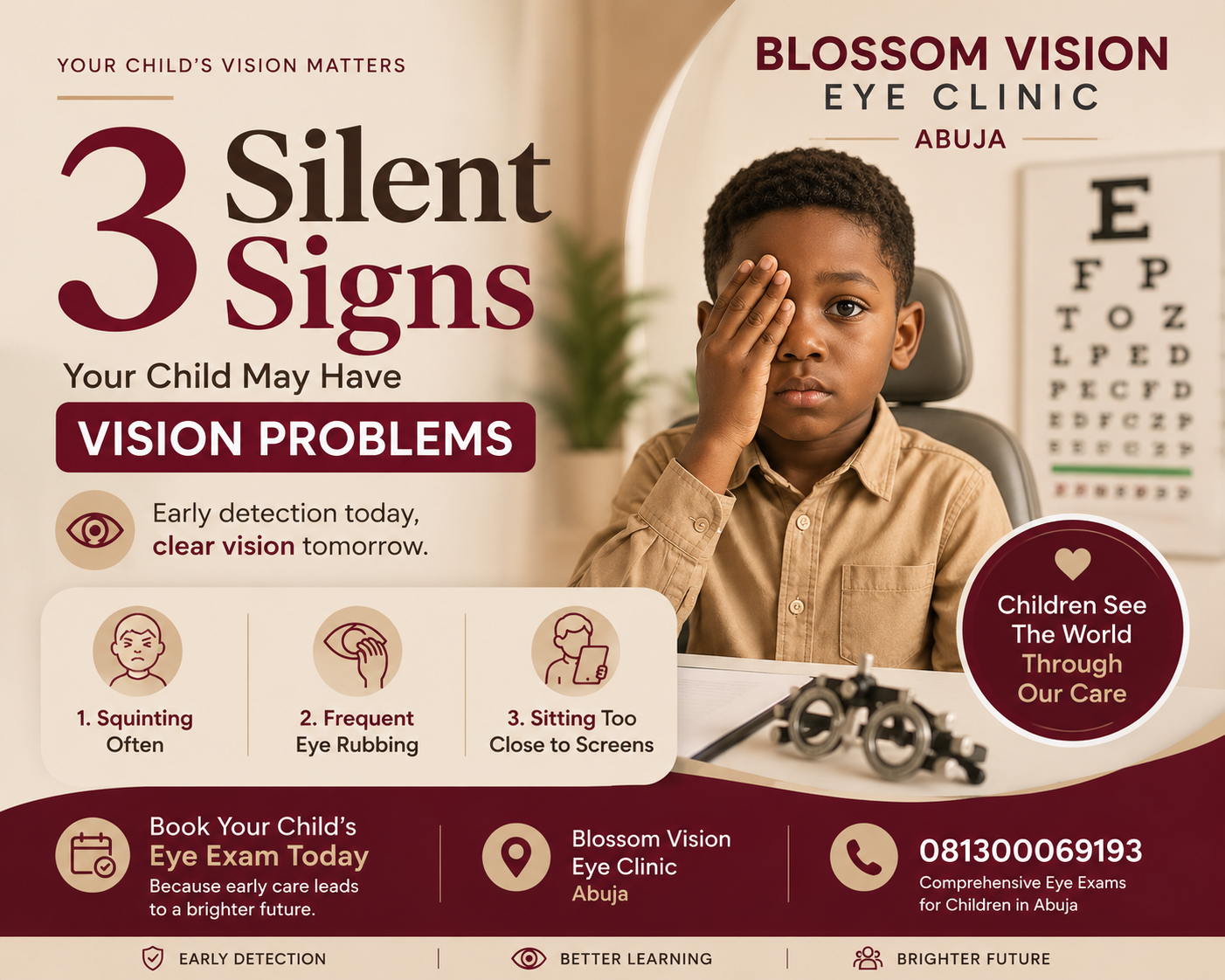
Many children with vision problems never complain because they assume everyone sees the way they do. Signs such as sitting too close to the TV, avoiding reading, frequent headaches, poor concentration, and declining school performance may indicate an underlying vision problem.
A comprehensive children's eye examination can detect issues early and help improve learning, confidence, and overall development.
Yes.
A child can have a significant vision problem and still pass through school for years without anyone noticing.
Children rarely say:
"I can't see."
Instead, they may:
- Sit too close to the TV
- Avoid reading
- Lose interest in schoolwork
- Rub their eyes frequently
- Develop headaches
- Become easily distracted
Many parents assume these are behavioural issues when the real problem may be their child's vision.
Why Vision Problems Are Often Missed
One of the biggest misconceptions parents have is believing their child will tell them if something is wrong.
Unfortunately, that's not how vision works.
If a child has always seen the world blurry, they assume blurry vision is normal.
They don't know what "clear vision" looks like.
As a result,
- many children silently adapt.
- They move closer.
- They squint.
- They copy classmates.
- They avoid activities that strain their eyes.
And over time, parents and teachers may mistakenly assume the child is lazy, distracted, or struggling academically.
7 Signs Your Child May Have a Vision Problem
1. Sitting Too Close to the TV:
This is one of the most common warning signs.
Children often move closer because it helps them see details more clearly.
If your child consistently sits very close to the television, tablet, or phone screen, it may be time for a professional eye examination.
To learn more, read: Why Does My Child Sit Too Close to the TV?
2. Frequent Headaches:
Vision problems can force the eyes to work harder than normal.
This extra effort often leads to:
- Forehead headaches
- Eye strain
- Fatigue after school
- Difficulty concentrating
If your child frequently complains of headaches, their eyes should be checked.
3. Squinting to See Clearly:
Squinting temporarily improves focus.
Many children naturally squint when trying to see:
- he classroom board
- Television screens
- Distant objects
Persistent squinting should never be ignored.
4. Poor School Performance
Many parents are surprised to learn that some "learning problems" are actually vision problems.
Imagine trying to learn mathematics when you cannot clearly see what is written on the board.
A child who cannot see properly may:
- Lose interest in lessons
- Make avoidable mistakes
- Become frustrated
- Fall behind academically
5. Excessive Eye Rubbing:
Children often rub their eyes when they experience:
- Eye fatigue
- Dryness
- Eye strain
- Allergies
Occasional rubbing is normal.
Frequent rubbing deserves attention.
6. Avoiding Reading and Homework
If reading causes discomfort, children naturally avoid it.
Parents may interpret this as laziness.
The child may simply be struggling to focus.
Watch for:
- Avoiding books
- Short attention span for homework
- Complaints of tired eyes
7. Holding Books or Devices Too Close
Many children with focusing or refractive problems compensate by bringing objects closer.
This behaviour often goes unnoticed because it develops gradually.
If your child consistently holds books or screens unusually close, schedule an eye examination.
Why School Vision Screenings Are Not Enough
Many schools conduct basic vision checks.
While helpful, these screenings are limited.
Most only assess whether a child can identify letters at a distance.
They do not evaluate:
- Eye coordination
- Eye tracking
- Focusing ability
- Binocular vision
- Eye health
A child can pass a school screening and still have a significant vision problem affecting learning.
The Link Between Vision and Myopia
We are seeing increasing rates of childhood myopia (short-sightedness) in Abuja and around the world.
Children today spend:
- More time indoors
- More time on near work
- Less time outdoors
Research increasingly shows that outdoor light plays an important role in healthy eye development.
Learn more: Myopia Control Abuja: How to Slow Down Your Child's Short-Sightedness
When Should Your Child Have an Eye Test?
You should book an eye examination if your child:
- Sits close to the TV
- Squints frequently
- Complains of headaches
- Rubs their eyes often
- Avoids reading
- Struggles in school
- Has never had a comprehensive eye examination
Early detection can make a significant difference in both academic performance and long-term eye health.
Frequently Asked Questions
How do I know if my child needs glasses?
Common signs include:
- squinting,
- headaches,
- sitting too close to the TV,
- poor concentration, and
- difficulty seeing the classroom board.
At what age should children have their eyes checked?
Children should have regular eye examinations even if they do not complain about vision problems.
Can vision problems affect school performance?
Yes. Poor vision can impact reading, writing, concentration, and classroom participation.
Can a child have an eye problem without symptoms?
Absolutely. Many children adapt so well that parents do not notice a problem until an eye examination is performed.
Is sitting close to the TV bad for the eyes?
Sitting close does not damage the eyes, but it may indicate an underlying vision problem.
Your child should not have to struggle in school because of an undetected vision problem.
If you have noticed any of these signs, schedule a comprehensive children's eye examination at Blossom Vision Eye Clinic Abuja.
Early detection can improve confidence, learning, and long-term vision health.
📍 Blossom Vision Eye Clinic Abuja
📞 081300069193